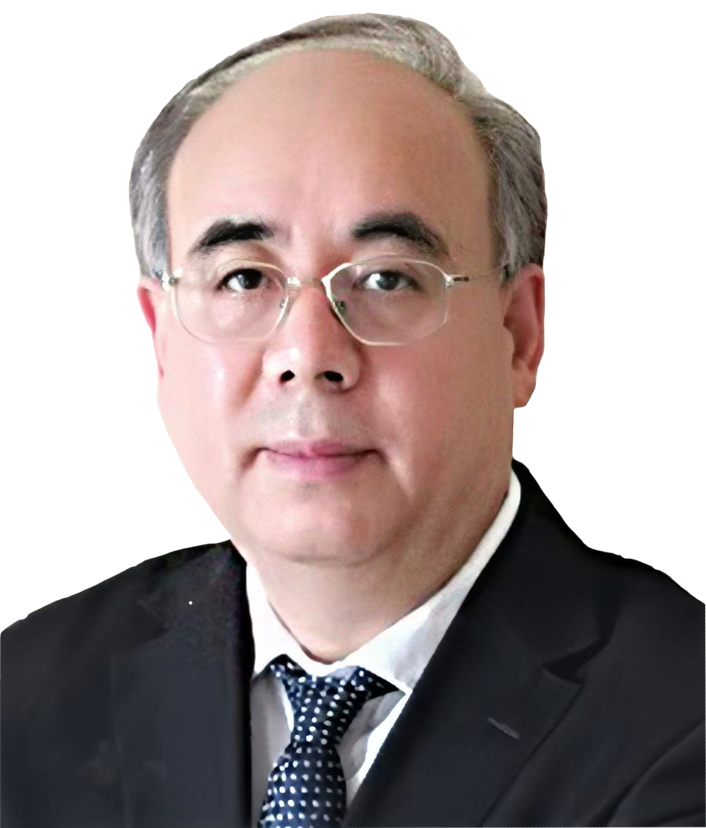
Prof Wei Hong
Southeast University, China
Abstract: In this talk, the research progress in millimeter wave (mmWave) and terahertz (THz) technologies in the State Key Laboratory of Millimeter Waves (SKLMMW) of Southeast University and cooperative enterprises are reviewed, including the integrated circuits (chips) design, system development and field trial test.
Biography: Professor Wei Hong received the BS degree from the University of Information Engineering, Zhengzhou, China, in 1982, and the MS and PhD degrees from Southeast University, Nanjing, China, in 1985 and 1988, respectively, all in radio engineering.
He is an Academician of the Chinese Academy of Science and a Professor of the School of Information Science and Engineering, Southeast University. In 1993, 1995, 1996, 1997 and 1998, he was a short-term visiting scholar with the University of California at Berkeley and at Santa Cruz, respectively. He has been engaged in numerical methods for electromagnetic problems, millimeter wave and terahertz theory and technology, antennas, RF technology for wireless communications etc. He has authored and co-authored over 400 technical publications and two books. He twice awarded the National Natural Prizes of China, once awarded the National Science and Technology Progress Award, four times awarded the first-class Science and Technology Progress Prizes issued by the Ministry of Education of China and Jiangsu Province Government, and 2021 IEEE MTT-S Microwave Prize etc.
Prof Hong is a Fellow of IEEE, Fellow of CIE, the Vice Presidents of the CIE Microwave Society and Antenna Society and was an elected IEEE MTT-S AdCom Member during 2014-2016, served as the Associate Editor of the IEEE Trans. on MTT from 2007 to 2010.
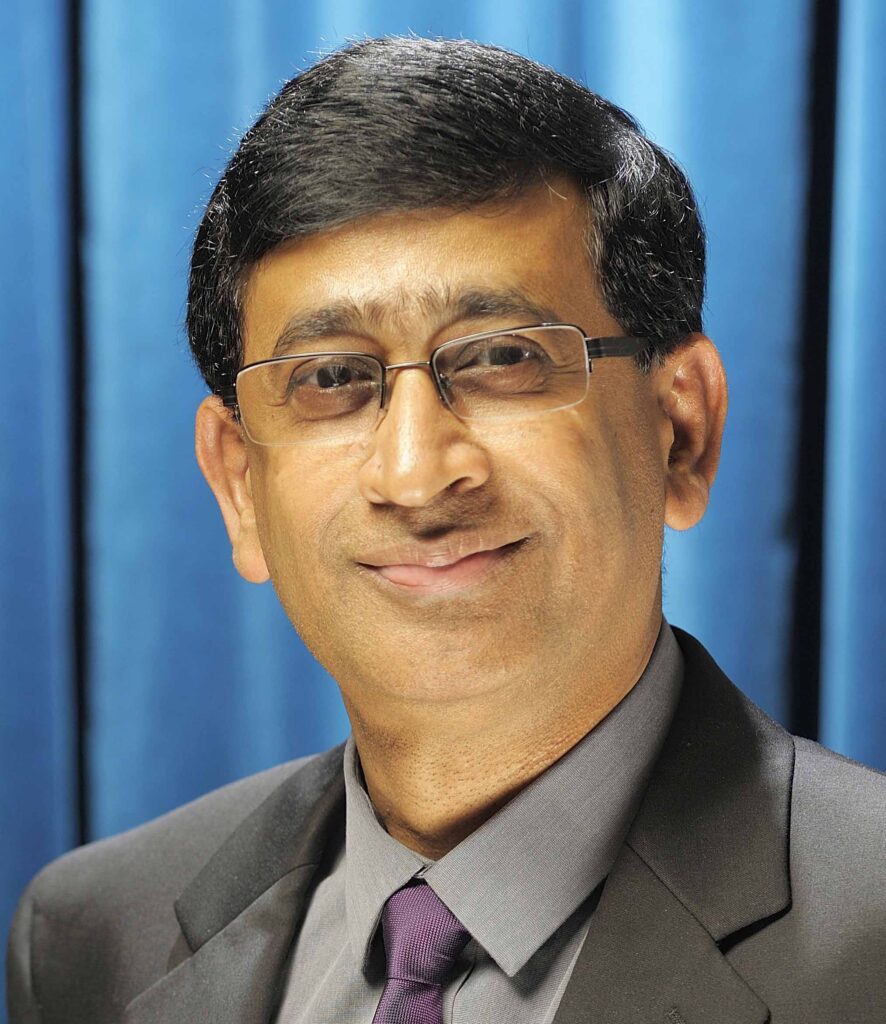
Dr Goutam Chattopadhyay
NASA Jet Propulsion Laboratory (JPL), 2025 MTT-S President
Abstract: Space exploration has long served as a powerful catalyst for inspiring the imagination of the next generation. The sight of rovers on Mars, images from distant galaxies, and the dream of humans returning to the Moon or reaching Mars ignite curiosity and a spirit of discovery in young minds. These missions are not just feats of engineering – they are stories that capture the human desire to explore the unknown and push beyond boundaries. By engaging students, educators, and the public in the wonders of space, exploration fosters STEM education, fuels innovation, and builds a generation that dreams bigger and reaches further. Beyond its inspirational value, space exploration offers a unique lens through which we can better understand ourselves and our place in the cosmos. As we study other planets and moons, we gain valuable insight into planetary evolution, atmospheric behaviour, and the potential for life beyond Earth. Observing Earth from space also provides critical data on climate change, environmental degradation, and the fragile systems that sustain life. In this way, space science not only fuels our search for extraterrestrial life but also deepens our understanding of Earth’s past, present, and future. Ultimately, exploring the universe is a journey inward as much as outward – it challenges us to think about our shared humanity, our responsibility to protect our planet, and our collective future among the stars.
In this lecture, we will explore the technological innovations in the MHz to THz frequency domain driving the next generation of space instruments and highlight specific instrument developments along with the fundamental science questions they aim to address.
Biography: Goutam Chattopadhyay is a Senior Scientist at NASA’s Jet Propulsion Laboratory (JPL), California Institute of Technology (Caltech), and a Visiting Professor at Caltech in Pasadena, USA. He previously served as the BEL Distinguished Visiting Chair Professor at the Indian Institute of Science, Bangalore, and as an Adjunct Professor at the Indian Institute of Technology, Kharagpur. Dr Chattopadhyay received his PhD in Electrical Engineering from Caltech in 2000. He is a Fellow of the IEEE (USA) and the IETE (India), an Associate Fellow of the AIAA, the 2025 President of the IEEE Microwave Theory and Technology Society (MTT-S), a Track Editor for the IEEE Transactions on Antennas and Propagation, and an IEEE Distinguished Lecturer. His research focuses on microwave, millimetre-wave, and terahertz receiver systems and radars, as well as space instrumentation for the search for life beyond Earth. Dr Chattopadhyay has authored over 400 publications in international journals and conferences and holds more than 20 patents. He has received over 35 NASA Technical Achievement and New Technology Invention Awards. In 2025, he received the NASA-JPL North Star Award, the highest honour bestowed upon a NASA-JPL scientist. In 2024, he was awarded the prestigious Armstrong Medal by the Radio Club of America (RCA) in recognition of his outstanding contributions to radio science. He also received the NASA-JPL People Leadership Award in 2023. Among other honours, he was named IEEE Region 6 Engineer of the Year in 2018 and received the Distinguished Alumni Award from the Indian Institute of Engineering Science and Technology (IIEST), India, in 2017. He is a two-time recipient of the Best Journal Paper Award from IEEE Transactions on Terahertz Science and Technology (2020 and 2013) and also received the Best Paper Award for Antenna Design and Applications at EuCAP in 2017. Additional accolades include the IETE Biman Bihari Sen Memorial Award (2022) and the IETE Prof. S. N. Mitra Memorial Award (2014).
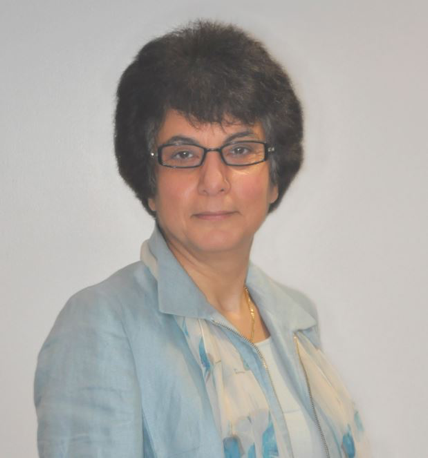
Prof Sana Salous
Durham University, UK
Abstract: In the World Radiocommunication Conferences in 2019 and 2023 several frequencies in the mm-wave and sub THz bands have been identified for 5G and 6G mobile radio networks. This has prompted various national committees to conduct radio propagation measurements for typical deployment scenarios to update the models in the International Telecommunications Union, ITU, recommendations ITU-R P. 1238-13 for indoor scenarios and ITU-R P. 1411-13 for outdoor scenarios. Similarly the European Telecommunication Stanadards Institute, ETSI has set up a working group to address the use cases, and develop propagation models in the sub THz band. The talk will give an overview of the multi band channel sounder developed at Durham University to conduct radio propagation measurements and the development of the models in the ITU recommendations and the current models under development in ETSI.
Biography: Professor Salous started her academic career as an Assistant Professor at Yarmouk University, Jordan. In 1989 she joined the Department of Electrical Engineering & Electronics at UMIST. In 2003 she joined Durham University where she currently holds the Chair in Communication Engineering and is the Director of the Centre for Communication Systems. Professor Salous radio propagation reseacrh covers HF for sky wave propagation for long range communication and UHF to the millimeter wave band for 5G mobile communications. In this area she introduced the digital frequency sweep technique for high bandwidth channel sounders for radio propagation studies. She is an active member of URSI, various COST actions and a member of the UK delegation to the International Union of Telecommunications.

Prof Marianna Ivashina
Chalmers University of Technology, Sweden
Future 6G networks will rely on mmWave and sub‑THz frequency bands to provide multi-gigabit data rates over kilometer-scale distances for applications such as wireless backhaul and satcom links. However, extreme propagation loss pushes current antenna and semiconductor technologies to their limits. Achieving the required effective isotropic radiated power (EIRP) demands a challenging combination of high-gain antennas, efficient high-power transmitters, and hybrid beamforming with scalable complexity and cost. This keynote will highlight recent advantages in millimeter-wave active antenna arrays addressing these challenges by exploiting new types of multi-beam quasi‑optical beamforming networks (QOBFs). Although these QOBFs may look similar to conventional Rotman lens based beamformers or waveguide-based spatial power combiners by Rutledge et. al, the quasi-optics is exploited in a different way: instead of merely forming switched/fixed beams, the geometry is shaped to spatially combine the power of an arbitrary number of input power amplifiers (PAs) and spatially route the combined power to an array antenna with an arbitrary number of ports with optimal complex excitation. The latter is electronically reconfigured while operating at equal power levels for the PAs. This boosts transmitter output power, while avoiding lossy switching components and corporate on-chip/off-chip power combiners, and enables adaptive beamforming at the same time.
Throughout this talk, we will emphasize the design challenges at the interface between antennas and electronics in mmWave/sub‑THz array front ends –including physical size constraints, mutual coupling effects, optimal (often highly non-uniform) excitations, PA output power generation and combining limits, and the insertion loss – and show how they can be addressed by co-design through QOBFs. To exemplify, two recently developed W-band frontend demonstrators will be discussed in detail: (i) A backhaul reflector antenna system which co-integrates a 100‑nm GaAs pHEMT multi-channel transmitter with a focal‑plane array via a QOBF, achieving up to 80dBm peak EIRP and ETSI Class 3‑compliant 2‑D electronic beam steering; and (ii) An ultra-wide-angle (±90°) scanning conformal linear array antenna with the same transmitter architecture, achieving 32 dBm RF output power per beam. While our demonstrator systems are implemented at W‑band, the underlying QOBF concept is in fact even more valuable as one moves toward higher mmWave, sub‑THz frequencies, where conventional corporate feeding and switching networks become increasingly lossy and difficult to scale. The results are based on joint work with other researchers at Chalmers, Ericsson and Gotmic (Sweden), supported by the Swedish Innovation Agency Vinnova and Swedish Foundation for Strategic Research, SSF.
Biography: Marianna Ivashina is a Full Professor and the Head of the Antenna Research Group at Chalmers University of Technology (Gothenburg, Sweden). Her current research interests include antenna array systems, integration of antennas with active electronic components, synthesis of aperiodic arrays, and other unconventional array architectures such as reflectarrays and transmitarrays. She has published extensively on the above topics, having authored/co-authored over 200 journal and conference papers.
Prof. Ivashina was previously an Associate Editor of the IEEE Transactions on Antennas and Propagation and is currently a Board member of the European School of Antennas (ESoA). Since 2021, she the Delegate of the European Association of Antennas and Propagation (EurAAP) for Region 6: Iceland, Norway, and Sweden.